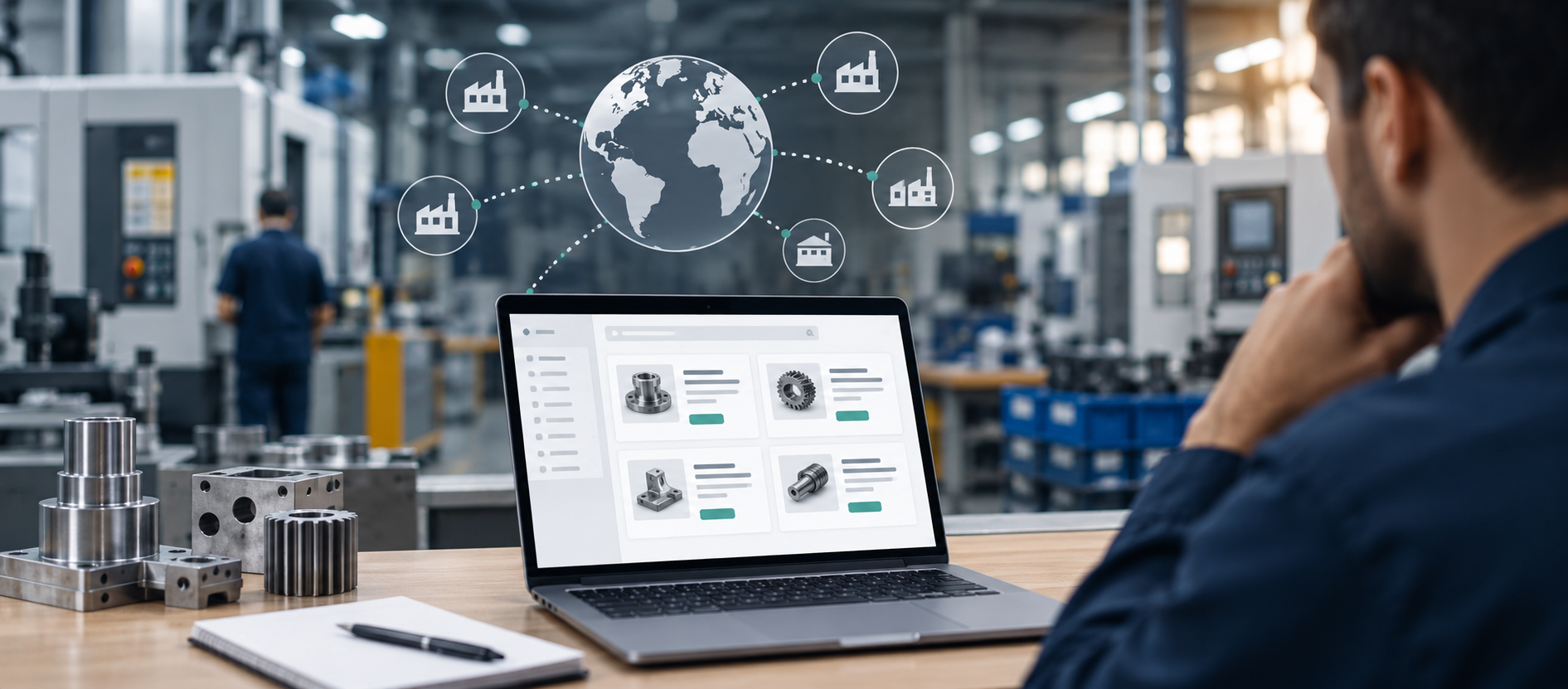
Finding the right manufacturing supplier is rarely as simple as searching for a product name. Buyers may need a CNC machining partner capable of holding specific tolerances, a panel builder experienced with a particular PLC platform, or a fabricator that can work with certain materials, certifications and production volumes.
Traditional supplier discovery often involves Google searches, directories, spreadsheets, referrals and lengthy email exchanges. Sourcing software for manufacturing brings these activities into a more structured process.
What Is Manufacturing Sourcing Software?
Manufacturing sourcing software helps procurement teams, engineers and businesses discover and evaluate suppliers based on their actual requirements.
Unlike a traditional supplier directory, modern supplier sourcing software can consider information such as manufacturing capabilities, processes, materials, industries served, certifications, production capacity and location.
Instead of searching through dozens of company websites, buyers can start with the requirement itself.
For example:
“Looking for a CNC machining supplier for stainless-steel components, tolerance ±0.02 mm, initial quantity 500 pieces with potential repeat orders.”
A sourcing platform can use these details to identify suppliers whose capabilities are relevant to the requirement.
Why Supplier Discovery Is Difficult in Manufacturing
Industrial sourcing contains considerably more variables than ordinary product purchasing.
Two companies may both advertise “CNC machining,” while their actual capabilities differ significantly. One may specialize in prototypes and small batches, while another focuses on high-volume automotive production.
Procurement teams therefore need to evaluate factors such as:
Manufacturing processes and equipment
Materials and technical capabilities
Production capacity and minimum quantities
Quality standards and certifications
Industries and applications served
Location and delivery capabilities
Engineering and customization support
This is why simple keyword-based supplier searches often produce too many irrelevant results.
How AI Is Changing Supplier Sourcing
AI allows sourcing platforms to move from keyword search toward requirement understanding.
Instead of forcing buyers to know the exact category or terminology, an AI-powered sourcing system can interpret a natural-language requirement and identify the capabilities that a suitable supplier should possess.
This can make supplier discovery software particularly useful for complex industrial requirements where buyers need to search by capability rather than simply by company or product name.
AI can also help structure incomplete requirements by identifying missing information and guiding buyers toward specifications suppliers need to provide meaningful responses.
What Should Manufacturing Sourcing Software Include?
A useful procurement platform for manufacturers should support more than supplier search.
Depending on the sourcing process, important capabilities may include supplier discovery, supplier profiles, capability matching, vendor comparison, enquiries or RFQs, document exchange, BOM-based sourcing and supplier evaluation.
Over time, the platform can also build procurement memory — retaining knowledge about previous requirements, suppliers, conversations and sourcing decisions instead of allowing that information to disappear across inboxes and spreadsheets.
From Supplier Search to Sourcing Workflow
The real opportunity is not simply making supplier directories faster.
Manufacturing sourcing software can connect the complete journey:
Requirement → Supplier Discovery → Shortlist → Enquiry → Evaluation → Supplier Selection
This gives procurement teams a structured workspace while allowing suppliers to receive opportunities that better match their actual capabilities.
Using Sourcik for Industrial Supplier Discovery
Sourcik is building an AI-first sourcing platform for industrial procurement.
Buyers can describe what they need in natural language and use Sourcik to discover relevant manufacturers, suppliers, OEMs, distributors, system integrators and engineering companies.
Rather than starting with endless directory filters, the process starts with the industrial requirement itself.
As sourcing platforms evolve, the goal is becoming clear: help manufacturing teams spend less time searching for suppliers and more time evaluating the right ones.